
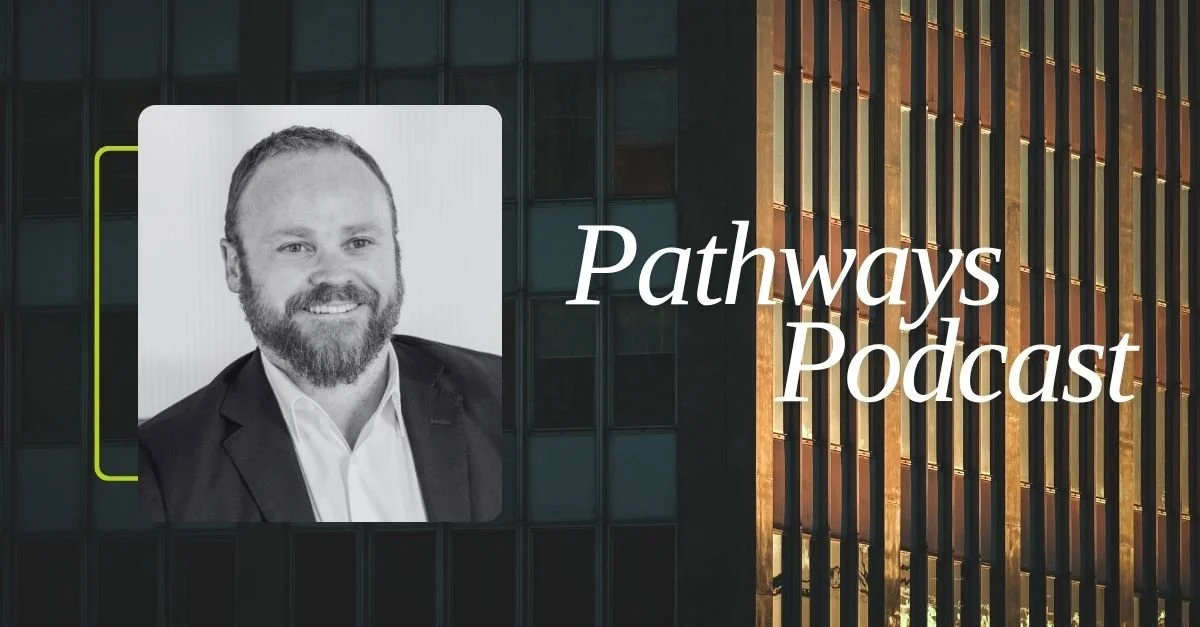
Pathways — Lance Willie, Oreana Property Group
Summary
Lance Willie’s career has been anything but traditional, building his path from humble beginnings and stepping into senior finance roles earlier than most, often as the most experienced finance professional in the room.
A defining moment came from an unexpected entry into property, taking on a temporary role that quickly became permanent — setting the foundation for a long-term career in one of Australia’s most competitive industries.
Without relying heavily on formal mentorship, he developed his leadership style through strong peer relationships, building a trusted network of advisors across banking, tax and property to challenge thinking and support decision-making.
At Oreana Property Group, he operates in a fast-paced development environment where success is driven by commercial acumen, stakeholder relationships and the ability to navigate complexity across a fully integrated property business.
A non-traditional path
The ‘legacy’ of working in a competitive industry – Lance runs through what it means to not only navigate the competitive journey to CFO within Property, but how he develops his role and his team around him.
Craig Gorton, Director of Atlas Partners sits down with Lance to talk through his rise to CFO in one of the most competitive industries out there. Lance takes us through humble beginnings, into the leader he is today.
Episode transcript
Craig: Let’s jump into this, Lance. I’d love to get a bit of an overview of your career to date, including the early days and some of your foundational learnings along the way.
Lance: Sure. My career hasn’t followed the traditional CFO path.
I went to a public school in Melbourne’s inner west and, during VCE, I was working quite a bit as well. It was coming out of a recession, my parents weren’t working, so I was balancing study with retail and labouring jobs to help bring in income.
That meant I probably didn’t get the results I could have academically, but I always had an interest in finance and business. After school, I went to TAFE and completed an Advanced Certificate in Accounting. It was one of those courses where people either loved it or hated it — and I loved it. I did really well and carried that into a university degree in Accounting and Banking & Finance.
During that time, I completed a co-op year at Melton Shire Council, which turned into a full-time role. I stayed there for about three and a half years, building my fundamentals. It was a great foundation, but I realised local government wasn’t where I wanted to stay long-term.
From there, I moved into a corporate role with GSA Industries, working closely with the Group CFO in a small team. It was a broad role — consolidations, family office work, tax, and even exposure to completely different industries like livestock.
Looking back, one of the biggest foundational learnings for me was being inquisitive. Ask questions — not just about processes, but about the task itself. What’s the objective? Why are we doing this? What does success look like?
That clarity saves time and leads to better outcomes. Early on, I was told I asked too many questions — but it made me more effective because I understood the “why,” not just the “what.”
Craig: You now work in property development — what attracted you to that industry?
Lance: Honestly, my move into property was pretty random — consistent with my non-traditional path.
I was looking for a permanent role when I got a call about a temporary opportunity in property. My initial reaction was hesitation, but I took it with the view it might turn into something longer-term. Within a week, I was offered the role permanently.
Property has a certain appeal — it’s dynamic, tangible and constantly evolving. Every project might look similar on the surface, but each one has its own complexities and challenges.
It’s an industry where you need to know your fundamentals and apply them differently every time. That’s what keeps it interesting.
Craig: What’s your view on the future of a CFO in property development?
Lance: Property is always going to be needed, but it’s a tough environment — and it’s cyclical.
Right now, the industry is going through one of its more challenging periods. You’ve got cost escalations in materials and labour, interest rate pressures, builders going under, and reduced market confidence.
It’s a perfect storm.
For CFOs in property, it comes back to the basics — cash flow is everything. You need to have complete visibility on when cash is going out and when it’s coming in.
On top of that, you need strong compliance, a deep understanding of project feasibilities, and a solid grasp of the operational side of the business.
It’s hard work. You’re dealing with a wide range of stakeholders — developers, builders, compliance, customers — and you’re ultimately delivering something very emotional: people’s homes or businesses.
That’s what makes it both challenging and rewarding.
Craig: Have you had mentors who’ve influenced your career?
Lance: Not in a traditional sense.
I haven’t had a formal mentor throughout my career. As I progressed, I was often the most senior finance person in the organisation, which can be quite isolating.
Instead, I’ve built a strong network of peers and advisors — other CFOs, bankers, tax specialists, consultants — people I’ve known for many years.
That network effectively acts as my “panel” of mentors. I can pick up the phone, test ideas, challenge thinking, and get different perspectives.
On the flip side, I’ve spent a lot of time mentoring others. That’s been incredibly valuable as well — it’s a two-way relationship. You often learn just as much through mentoring as you do being mentored.
Craig: And finally, what’s your favourite book?
Lance: Legacy by James Kerr.
It’s about the New Zealand All Blacks and how they transformed their culture to become one of the most successful sporting teams in the world.
What I love about it is how transferable the lessons are — across sport, business and life.
It’s all about creating a strong sense of identity and purpose. What does it mean to wear the jersey? What standards do you uphold?
That idea of building a culture where everyone is aligned, connected and accountable is incredibly powerful — whether you’re running a team, a business or your own career.
Craig: Great insights, Lance. Thanks so much for your time.
Lance: Thanks, Craig.