
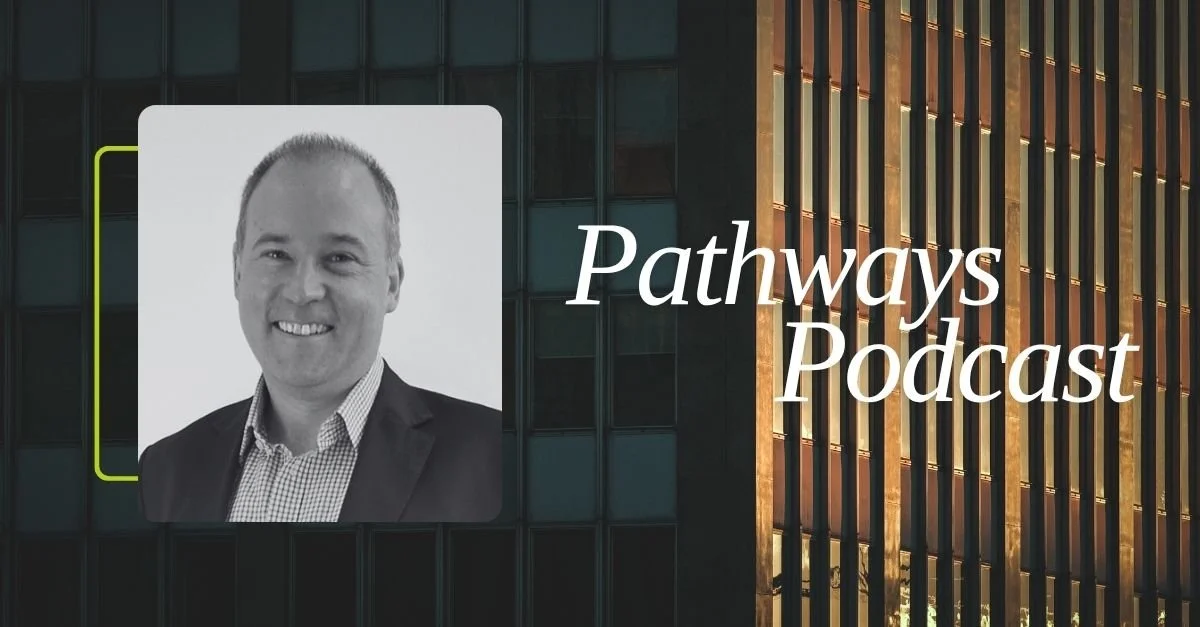
Pathways — Fionn O’Keeffe, Buildxact
Summary
Fionn O’Keeffe’s career has been shaped by a global outlook and a willingness to step into new environments, building experience across multiple countries and industries before settling into the Australian tech landscape.
Starting in professional services, he developed a strong technical foundation before moving into commercial roles, where he expanded his scope beyond finance into broader business strategy and operations.
A defining theme throughout his journey is embracing change and backing himself in unfamiliar situations — using each move, both geographically and professionally, as an opportunity to accelerate growth and broaden perspective.
At Buildxact, he operates within a fast-growing SaaS environment, balancing scale with structure — focusing on sustainable growth, operational discipline and building a finance function that supports a high-growth technology business.
Backing yourself globally
A career move into the property tech industry right before the 2008 economic crisis, would prove to be the best bad decision of Fionn O’Keeffe’s career. Though the GFC would dry up the property market overnight, the experience not only thrust Fionn into the growing tech industry, it taught him some of his greatest leadership lessons that set him off on a tremendous path.
Craig Gorton, Director of Atlas Partners, takes time to walk through the journey with Fionn O’Keeffe, CFO of Buildxact. We discuss the journey and key learnings along the way.
Episode transcript
Craig: Could you start by talking us through your career, including the early days and your foundational learnings?
Fionn: Thanks, Craig — appreciate the opportunity.
My career started a little differently to many. I began at KPMG in Malaysia in the early 90s while Australia was in recession. I had grown up in Singapore and Malaysia, so it made sense at the time and worked well personally as well.
I spent about five years there completing my professional qualifications. It was a very diverse environment, and one of the key things I took away was an appreciation for working across different cultures and backgrounds — something that’s stayed with me throughout my career.
From there, I moved into a role on a hydroelectric project in Laos. It was a fascinating experience, but the Asian financial crisis brought that project to a halt.
Craig: And what happened when you returned to Australia?
Fionn: I came back in the early 2000s and essentially had to reinvent myself. My experience in Asia wasn’t as well recognised locally, so I took on whatever I could to build Australian experience.
At one point, I was literally unpacking boxes in the morning and doing the books in the afternoon for a friend’s business. It was a humbling experience, but it helped me rebuild.
I then joined a company called Remunerator, where I eventually became CFO. It was a relatively small executive team, so I ended up taking on a broad range of responsibilities, which was great for development.
Craig: That led you into the technology sector — how did that transition happen?
Fionn: My first tech role was with Majitek, now Urbanise. It was focused on software for the property sector, particularly in Dubai.
Unfortunately, the global financial crisis hit shortly after we were ready to launch, and the market disappeared overnight. It was my first real experience as a CFO during a crisis — making tough decisions around resources and communicating with the board and leadership team.
That experience reinforced the importance of clarity — understanding your objectives, your resources, and making informed decisions with good communication.
Craig: And from there, you continued in tech?
Fionn: Yes. I moved to Whispir, which was scaling rapidly and raising capital. That role highlighted the importance of communicating the story behind the numbers — not just the numbers themselves.
After that, I joined PeopleStreme, where I was brought in to help raise capital or find a strategic partner. That involved significant change — including overhauling systems and processes to enable scale. We ultimately sold the business to Ascender.
I stayed on as Group Financial Controller at Ascender, managing a larger team across multiple locations, particularly through COVID.
Craig: And your journey to Buildxact?
Fionn: After Ascender, I moved into a few more tech roles, including Optima Technologies and Kepler Analytics. Both involved navigating growth, acquisitions and, at times, restructuring.
Those experiences really reinforced the importance of having a clear plan, the right structure, strong processes and good relationships across the business.
I then joined Buildxact, where I am today. It’s a business with strong fundamentals — clear strategy, good product-market fit, data-driven decision-making and strong leadership. There’s a high level of trust across teams, which allows people to perform at their best.
Craig: What attracted you to the technology sector?
Fionn: I didn’t initially set out to work in tech, but it’s where I’ve ended up. What I enjoy is the pace and the agility.
You’re often working in founder-led businesses with evolving products, new markets and constant change. It’s less predictable than large corporates, but that’s what makes it interesting.
There’s also a real opportunity to make an impact — to build, improve and shape the business rather than just maintain it.
Craig: Looking ahead, what does the future of the CFO role in tech look like?
Fionn: There’s a lot happening, particularly with AI. It presents both opportunities and challenges.
AI can help automate routine tasks and free up teams to focus on more value-added work like analysis and decision-making. That’s where finance teams should be spending more of their time.
The role of the CFO will continue to evolve, but there will always be a need for strong financial leadership. It’s about adapting to new tools and expanding the scope of the role.
Craig: What are the biggest lessons you’ve learned as a CFO?
Fionn: Communication is probably the most important. Numbers on their own don’t mean much — it’s how you communicate them and the story you tell that matters.
People management is also critical. You’re only as good as your team, so building trust and alignment is key.
And more broadly, delivering on what you say you’ll do — that’s how you build credibility and respect.
Craig: Have you had any mentors who have influenced your career?
Fionn: I’ve worked with a lot of good people over the years. I haven’t always had a formal mentor, but I’ve learned from those around me — both what to do and what not to do.
You take the best traits from people you respect and apply them in your own way.
Craig: And finally, what advice would you give to future leaders?
Fionn: Focus on communication. Whether it’s verbal, written or visual, being able to clearly and concisely get your message across is critical.
Technical skills are important, but communication is what really sets people apart. It’s what helps you influence, lead and gain the respect of others.
Craig: Great advice. And just to finish — what do you like to read?
Fionn: It depends. Sometimes it’s pure escapism — crime or spy novels. Other times, I enjoy biographies or books on global politics.
But ultimately, reading is about switching off. It’s important to take time away from work and give your mind a break.
Craig: Fantastic. Thanks so much for joining us, Fionn.
Fionn: My pleasure, Craig.