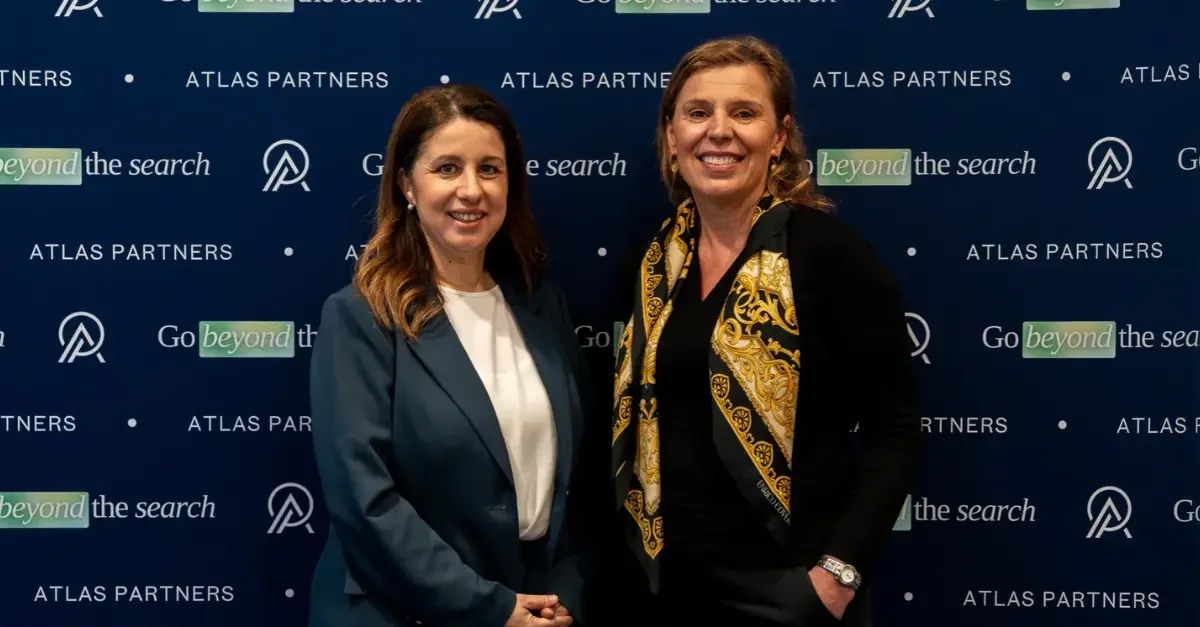
Nicole Randle in conversation with Melissa Azzopardi at NextGen Power Moves
The path to becoming a CFO isn't always a straight line, and according to Nicole Randle, some of the most valuable career moves are the ones that take you sideways.
At our latest NextGen Power Moves breakfast, Nicole, CFO of Richmond Football Club, joined Melissa Azzopardi, GM Finance at the AFL, to reflect on a career spanning banking, technology, governance, wine and professional sport.
From taking ownership of your career and recognising the value of transferable skills to backing yourself for new opportunities and learning to speak the language of the business, Nicole offered plenty of practical advice for women looking to take their next step in finance.
Read the conversation below.
Owning your career path
Melissa: Thank you, Liam, for having us. It's great to see so many new faces and some familiar ones as well. Hopefully this will be more of a conversation. Nicole, you've had a big career, and now you're CFO at Richmond Football Club. Your path hasn't always been a straight line. I'm keen to hear how you got here and why. What decisions did you make along the way, and were they conscious ones?
Nicole: That's a great opener. As Mel mentioned, I've done a lot of different things across a few different industries. If I go back to the very start, part of it is what drives me as an individual. I'm always wanting to learn more, to expand and get more breadth in what I do. I'm always interested in what others are doing.
Very early on, one of the best pieces of advice I was given was: when it comes to your career, you're the only one who will drive it. No one else will do it for you. If you just wait to get tapped on the shoulder, you run the risk of being a little bit rudderless. Having control over your career plan is the most important thing. I remember being in my early 20s and thinking, "Really? How do I do that?"
The second piece of advice I was given was: don't ever think a career plan can only be linear. Always think about multiple options. Ultimately, I always wanted to be a CFO. I started my career as a graduate at [unclear], so a bit of nostalgia there. I knew I was a deep finance expert, but I also knew that aiming only for CFO was too narrow. So I always had a COO path in there as well, alongside the traditional finance path. I always had multiple options available.
Alongside that, keep your career plan a live document. It's not set-and-forget, sitting in the bottom drawer. It's something you keep alive.
The third piece of advice came from a training course I did a long time ago, where I was introduced to what I call "the wheel". Mel and I spoke about it a little while ago. What I realised very early in my career, and have held to ever since, is recognising the experiences and capabilities you need to build to be more than just a finance professional.
We were talking earlier today about being involved in an IT project or a system integration. You learn so many skills from that. You might be exposed to project management, to data flows, to technology capability you didn't appreciate when you were just a user and now you're involved in the design.
The wheel is about the skills beyond your technical finance skills: exposure to systems, risk, legal, transformation, sales. Every company has some interaction with all of those. Think about where you'd plot yourself today, where the gaps are, and how you'll start to address them.
Getting out of your lane
Melissa: I love hearing about the wheel. You've touched on getting exposure to different areas. How do you influence your way into those opportunities? People often see it as: you're finance, you do finance, stay in your lane. How do you get out of your lane?
Nicole: In some cases I've been fortunate to get a tap on the shoulder: "We really want you to work on this project." And I've always said yes. That's step one. If you're ever asked to get involved in a project, say yes. Then back it up with: "And I want to be more than just the finance person."
Anyone in finance, while you've got that deep expertise, usually knows more about the business than a lot of the business leaders do, because you understand the drivers and all the other components.
Melissa: We've got the best seat in the house.
Nicole: We do. We see everything. So first, if you're asked to join a project, never say no. Say "sure", then work out with your line manager how you'll make it work.
Second, make it known what you want exposure to. A simple example: a while ago I was suddenly being asked to look at contracts, and I thought, "I really need some help here." So I sought out someone in our legal team and asked if we could spend some time together. I wanted to understand how to think about a contract and what to look out for. In a way, you're building networks to build a skill. And whenever you go to someone in a business and ask for help, nine times out of ten the answer is "sure", because people want to help each other.
Third, be deliberate. Know the skills you want to keep building, whether that's sales or transformation, and reach out to those areas. "I'm looking for a bit of experience here." That might be sitting in on a team meeting, or if the CFO is going into a meeting about risk: "Can I come along and just listen?" Find ways to get exposure and build relationships in the areas you want to grow in. It's on you to be specific about the skill you're looking for and how your organisation can help you get it.
Sideways moves
Melissa: You've said your career hasn't always been linear. How do you decide whether a move is sideways or up, and what's right for building the skills you need? When I think about my own career, I'd never have pinpointed ending up at the AFL or in sport. It was about the skills and the opportunity, not the title. Sometimes we get stuck on titles. What are your thoughts?
Nicole: A lot of my career has been sideways moves. One of them was probably the hardest job of my career. Is anyone here in technology? Hands down, technology is one of the hardest areas, dealing with technologists and engineers who don't talk finance. I think we've all been there.
As a kid I was a fiercely competitive sportsperson. I played five different sports at a high level, and I love the grit and the competition. But when it came to my career, I quickly realised it's not always about the upward move or the promotion. Sometimes you get more from a lateral move.
Here's an example. I was CFO for Technology at the bank, a big, complicated gig. I got to a point where I thought, "I've done this. I've got it to where it needs to be. I want to do something different." I was talking to the Deputy CFO at the time, and he said, "We've got a role as Global Head of Governance for Finance." My first reaction was, "Governance? Really? I don't really want to do that."
I spent a lot of time thinking about it. The first question I asked was why they'd come to me. What did they see? "Move away from the title. What really is this role?"
It ended up being the best sideways move I've ever made. Rather than being deep in one part of the business, I got a bird's-eye view across the whole organisation globally. I got exposure to the board and the most senior executives in the bank. And I was responsible for creating a governance framework that didn't exist, and bringing 25,000 people on the journey. I'd never have had that opportunity in any role I'd done before.
That taught me sideways moves aren't about being shunted. To put it in perspective, I used to use the concept of snakes and ladders with my teams. You get from start to finish, but it's never only up. As Mel was alluding to, the CFO with a straight linear path, graduate to analyst to manager to senior manager to CFO, doesn't exist anymore. I don't know a single one. Pick the sideways moves that matter to you. They'll give you a richer experience to carve your own way.
Backing yourself
Melissa: We all probably overanalyse when we see a job ad. "Can I do this? I can't do that." Often we can do seven or eight out of ten. How do you deal with that and build the confidence to put your hand up and say, "I'll learn the rest"?
Nicole: When Mel and I talked about this a couple of months ago, we discussed how, from what I've seen interviewing over the years, there's a gender difference. I checked this with Liam and Sam too. Men will often tick through the ten boxes and say, "I've got this." Women will usually want to be sure they've got eight out of ten nailed.
For finance people, I'd start by saying this, and not in a negative way: finance is, technically, a commodity. Think about what drives revenue. Price times volume equals revenue, in its simplest form. Moving from banking to the wine industry to football, those same principles held true. So first and foremost, finance is transferable across any industry and any country. Know that and back yourself.
Second, a live example, under Chatham House rules. When I was approached for the Richmond CFO role, I squealed, because I'm a Richmond fan. Through the whole process, interviewing with the CEO and the board, there was not a single question on my technical capability. Not one on technical accounting. What they wanted to know was: how do I drive people? How do I motivate and lead people? How do I create culture? So when you're ticking off eight out of ten, remember technical skills are only one part. What else do you bring? Anchor it back to the wheel: your project management skills and the other experiences you have.
One last story. My 20-year-old nephew was in the final year of a four-year uni degree last year and started applying for graduate roles. He said, "Auntie Nic, I've got this internship opportunity to apply for." I was thrilled. So I asked him to walk me through his CV. He'd spent the last couple of years at Hungry Jack's, going from cashier to manager, and that's all his CV said.
I said, "Mate, let's reframe that. What are you actually doing at Hungry Jack's? You're doing stock control and quality control. You're performance managing. You're doing customer service and upholding quality standards. There's so much you're doing that isn't on that piece of paper. You're underselling yourself."
From the CVs I've seen, and I'd check this with the recruiters, women tend to be less comfortable with the selling side. So when you put yourself forward, put your chest out a little and ask: what have I actually done, and what does it really look like? My nephew got the internship and then a graduate position, which he starts next year. I'm very proud. Had he not reframed it, he probably wouldn't have got it. So be thoughtful about how you position yourself, while still being authentic to who you are.
When you get it wrong
Melissa: So you've got the skills and the confidence, and you walk into a new place thinking, "I've got this." Something we don't always talk about is when we get it a bit wrong. Maybe we overcompensate, or bring the style of our last business. Has that happened to you?
Nicole: Absolutely. I'd be lying if I said everything has been tickety-boo. I've had my fair share of things I've got wrong. Right up front: if you ever sense something is going off the rails, call it early. Pull in who you need to. Don't let it slide. Nip it in the bud.
A fairly recent example. Is anyone here working in banking? In banking, there was a certain way you presented information: big, consulting-quality decks, big meetings, everyone in a room. Everything was big scale.
When I moved to Treasury Wine Estates, the first thing I did was get around to all my stakeholders and assess what was working, what they needed, what they needed help with and what we needed to improve.
Where I failed was in how I played that back. I was still institutionalised by my previous employer, and I didn't read the room. I went in with a beautiful deck: "This is what you told me. This is what we're going to do." It was deer in the headlights. "What is this?"
I quickly realised how you do business is very different at different organisations. Treasury wanted informal, one-on-one conversations. No decks, no presentations. A slower, more organic way of operating, where the bank was "hit me hard". I hadn't even clicked over 90 days.
So I got around to everyone: "I know that didn't land well. I didn't read the room. Let's work through it. What can I do differently next time to make it a win-win?" I doubled down on one-on-ones, and over about four weeks we recovered. They wanted shorter meetings and to be involved.
The biggest learning was that they wanted to feel they'd co-designed it, that it was their idea. I thought, "That's easy. I don't care whose idea it is as long as we get the job done." Some stakeholders wanted to be the ones fronting it, with me in the wings. At the end of the day, we still got to the organisational outcome we needed.
Melissa: There's a lot in that to learn. Thank you for sharing.
Speaking the business's language
Melissa: You've touched on how knowing your finance isn't always enough. You end up in rooms with people who don't understand finance, and you have to reach them on a different level. How do you go about that?
Nicole: I learned this when I moved into the CFO Technology role at the bank, where my finance team was hitting me with very technical accounting, and even as an accountant I was thinking, "Whoa, take it back."
Whenever I meet with the business, I avoid accounting language and put things in language they know. This will sound weird, but I think about the man on the street with an A-frame sign. What would that sign say to get the message across? Keep it simple, no jargon, in their language.
In football, for instance, one of the big revenue streams is sponsorship. I could talk about pricing strategy, but what matters most? The renewal rate. The longevity of the partnership. How do we partner with sponsors for more than a three-year period? How do we think about the real estate on our jerseys so they're maximising it? At the end of the day it's revenue. But rather than starting with "What's your revenue target?", I pick up the language they use, so we're immediately aligned.
To prepare, I'll grab one of the junior sponsorship people and be open and vulnerable: "I've got a meeting with the team. How do you guys talk about this? I really don't know. Help me understand." Nine times out of ten they say yes, because they love teaching finance something.
You indirectly gain a lot more knowledge of the business. You deepen your understanding of the revenue drivers and the levers being pulled. In the next meeting you can go deeper and keep peeling back the onion, and let your curiosity drive you. As Mel knows, when we were doing our five-year plans a couple of weeks ago, that meant we could have targeted conversations about what we're targeting and why, and triangulate far more than before.
Melissa: It's finding out what matters to them and how you connect. As finance, we want the business to come to us. We don't want to be at the end, just fixing problems. That curiosity and learning what they do is really important.
What makes a great CFO
Melissa: You've had an amazing career, and now you're CFO at Richmond. What makes a great CFO versus a great finance leader?
Nicole: Does anyone know agile methodology? In my last five years at ANZ, we rolled out agile, a different way of project management. Instead of a sequential Gantt chart, you work in sprints. You chunk down the work: not "what happens in the next three months" but "what happens next week", then build on it, pivot and fail fast.
A key part of that cultural shift was the idea of a T-shaped individual. You bring deep capability. Everyone in this room is a deep finance expert. That's your bread and butter and your superpower. But the X factor is: what else do you bring? You lean into conversations on risk, economic factors, strategy.
It's preparing the key questions. What should we be talking about as a business? Be curious, inquisitive and proactive, and think beyond the problem in front of you to what else needs considering. Sometimes you won't know the answer. Even just asking the group, "Is there anything else we should be considering?" can create an unlock moment.
An example from a while back. Have you noticed the little notch on the side of your credit card? I can only speak for ANZ cards, but I think all banks have it now. Do you know why it's there? It's for vision-impaired people.
We were in a meeting about the next credit card design, and I was the brave one who asked, "Is there anyone else we need to consider?" A colleague who happened to be walking past the meeting room, who was vision impaired, said, "Well, how are you thinking about us?" We'd never even thought about it. That small cut-out unlocked a whole new customer profile. The vision-impaired community felt the bank was really listening, with a product that met their needs and helped the community. Then all the banks followed. It shows what one simple question can do.
As Mel said, never underestimate that in finance you don't only see the financials. Finance is at the start of the game and at the end of the game. You see the trends. Be curious about what's driving the results, not just the numbers.
Preparing for sport
Melissa: You hadn't been in sport before, and we know you're a Tigers tragic. How did you prepare for this role? How do you know when you're ready for the next role?
Nicole: After a very long time in corporate, I knew my next move had to be in the not-for-profit sector. I'd done a lot of volunteering and treasurer roles, but it was a blind spot. To be rounded in my career, that's what I needed. And I knew sport was going to be the next thing. It goes back to my childhood.
First, I started paying attention to those emails inviting you to networking events. There were a lot of women in sport events and sports speakers. I became very deliberate about getting into those forums, to bump into those women and ask them a few questions.
Second, when I landed at Richmond, I knew Mel was also ex-Treasury. I hit her up in my first week: "Mel, you know where I've come from. You've been in footy for five or six years. I want to hear your story." I reached out quickly to people in my network I knew would tell me as it is, and give me advice on navigating football. Every industry is different: what to look out for, who to connect with, what to do. So thank you, Mel.
Melissa: It's been a benefit for both of us. It's so nice to have that authentic, trusted conversation, because club land is very different to AFL land, and how we work together is so important.
Final advice
Melissa: One last piece of advice for the group. This is a room of people in roles now and looking at their next step. What's your one parting message?
Nicole: Three things.
Only you can back yourself.
Find someone you trust who you can share where you're heading with.
Have a career plan. Your line manager or company has probably asked you for a career plan or development plan. Do it, and really take the driver's seat.
Melissa: Excellent. Thank you, Nicole.
Audience Q&A
Would you target different skills today?
Renee [surname and employer unclear]: I liked hearing you talk about being purposeful about building different skills. If you were early or mid-career now, would you target different skills? Has that changed, or is it principally the same?
Nicole: I think it would be the same categories of skill, but a different approach. I'm still a deeply analytical person, and that's held me in good stead. But how I did analytics 15 years ago is very different to how you'd approach it today: you'd go straight to Copilot. It's all about crafting the prompt. "How should I present this information?" Previously I'd have had to start from scratch. So the skills and capabilities I focused on haven't changed, but how you go about building them has. The turnaround is just faster now.
How do you build culture?
Audience member: You mentioned no one asked about your technical skills, only how you motivate people and build culture. How does a person build culture?
Nicole: I'll give you the Richmond example, because it's the most recent. My predecessor had been there for 24 years, so you can appreciate what that culture would have been. Very early on, I knew my predecessor and I couldn't have been more polar opposite in our approaches. I'm not being disrespectful. They're just very different approaches.
One of the first things I did was bring my whole team into a room, with a short pre-read, and ask: "What does a high-performing finance team mean to you?" The pre-read was a Harvard Business Review article about a high-performing basketball team. It gave a sporting example of high performance, with enough gems to get the synapses firing. The aim was to align on what high performance means and intentionally co-create it.
My second question was: what's most important to us now, and what's most important for our success in the future? We used dot voting. Nothing fancy. That also gave me the chance to share my own view of high performance without telling them "this is what we're going to be".
I needed to bring them on the journey. What I've learned over my career is that if you tell people what to do, more often than not they'll just go along with it. If you bring them on the journey and bring out the goodness, you get there faster. It's co-owned. People think, "I helped create this," so they have a vested interest in making it work.
Audience member: Which basketball team was it?
Nicole: I can't remember, but I'll send the article through so it can be circulated.
Is the market more open to people changing industries?
Audience member: Your journey is still not that common. A lot of people stick to their industries. How is the market changing? Is there more appetite for people moving across industries? I still feel people are often too scared to hire someone from a different industry.
Melissa: We were talking about this earlier. I have a similar background, and I never thought I'd land in sport. But they actually came looking for someone who wasn't from sport, because of the governance, the growth of the business and the commercial acumen required. Sport is full of people with passion, absolutely driven to deliver high performance, but not always considering the financial implications or thinking about forward-looking finance. We work in an industry that runs week by week, so part of the job is getting the business to think long term.
Even when I'm recruiting, I'm looking for people outside sport, because I want those different skills. It is a culture shock. Walking into sport is very different, and it took me a while, which is why I support Nicole wherever I can. The structure and compliance are different.
But the business world is global, and we're looking for the same things: revenue, fan engagement, who your customer is, and how you get there through AI and technological efficiency. The skills are the same. The subject matter and the people are a little different, which gives you the chance to bring your own flair and be the expert in the room. I work with a number of the clubs, because it's in my interest to have great people at the clubs so the whole industry grows.
Never underestimate that the skills are transferable. But you still need a connection to the industry. I love footy. I grew up in the country, and my first job, at 13, was treasurer of my local football club. Many years later, after working in ASX-listed companies, I ended up in footy. I don't think industry is a barrier. Even in our football department, our GM of Football Operations is a former real estate MD, because of the franchise relationships and skill set he brought, and he's done an amazing job.
Nicole: I'd concur with everything Mel said. I don't look at industry first; I look at experience. A simple example: there are so many parallels between football and retail banking. With a credit card customer base, it's all about acquiring customers, retaining them and pricing. Membership has exactly the same strategic and financial implications: acquisition, retention, pricing, product. Finance skills are transferable across all industries.
Like Mel, I don't look at the industry people come from. In fact, I want diversity of industry, because it gives you diversity of thought. We're recruiting right now, and I'm actively not looking for sporting experience. I'm looking for people from outside the sector.
Host: Thanks again to Nicole Randle and Melissa Azzopardi for a great conversation. We've just ticked over 9 o'clock, so if you need to leave, there are validated parking tickets out here. Otherwise, feel free to hang around. We look forward to seeing you again soon.