
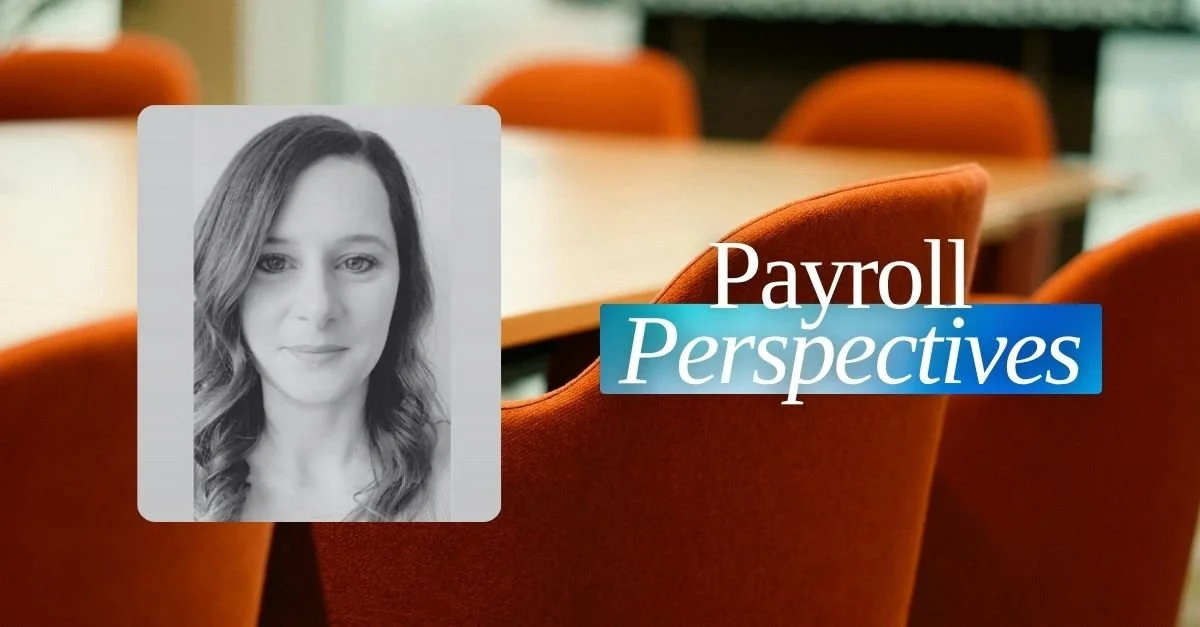
Payroll Perspectives — Rebecca Fletcher, Alfred Health
Summary
Rebecca Fletcher’s career has been built across both payroll and HR, progressing from Payroll Officer to leading a newly established division at Alfred Health, supporting a workforce of over 14,000 employees.
A defining theme throughout her journey is the integration of payroll and people functions — recognising payroll as a learned skill that requires both technical capability and strong communication across teams.
Her experience highlights the shift in leadership required through COVID and hybrid work environments, where trust, communication and balance between support and autonomy became critical to managing high-performing payroll teams.
Now leading Employee Connect, she is focused on improving operational efficiency at scale, using her experience to streamline administration and enhance the employee experience across a large, complex organisation.
Leading payroll at scale
It’s Rebecca Fletcher‘s near two-decades of experience across Payroll and Human Resources that has seen her work her way from Payroll Officer, to now managing a new division at Alfred Health.
As Manager of Employee Connect, The Alfreds innovative approach to managing the sheer amount of administration that comes with having ~14,000 employees, Rebecca is putting years of insight and experience into practice, supporting a brand new team. She sat down with Shawny Smith to discuss her journey.
Episode transcript
Shawny: Hi, Rebecca. How are you going? Very excited to complete this episode with you. So, just wanted to start it off with, if you can briefly introduce yourself and where you work at the moment?
Rebecca: So, my name is Rebecca. I am currently working at Alfred Health at Alfred Hospital. My job title there is a little bit of a strange one. It is Employee Connect Manager, or Manager of Employee Connect, which is a fun new team that Alfred Health has introduced in the last couple of months.
Shawny: Can you tell me a little bit about how that team’s split up and how it’s a bit different from a payroll manager position?
Rebecca: Yeah, of course. Given the sheer volume of staff at Alfred Health, as you can imagine, it’s in excess of 14,000 at the moment, paid and unpaid. It’s a lot for one team to take on the whole payroll function. So, what Alfred Health has done is they’ve actually split that functionality into two different teams. We have our payroll processing team that are your core processing ops team — they run the pay runs every week or every fortnight, do all the calculations and aren’t as employee-facing.
The Employee Connect team does all of the admin side of payroll. So, we do all the onboarding, all of the variations, all contract amendments that need to be plugged into our HRIS system. We do a lot of system-based changes. We also take inbound employee inquiries via phone and a ticketing system. My team are not specifically from a payroll background. We do have a couple, however for the majority it is more of an eclectic mix, and I am training them up to get a little bit more payroll experience for the benefit of our team.
Shawny: Now it’s a very interesting role, especially in large organisations. Tell us a little bit about your career so far in leadership and your perspective on payroll now that you’ve had experience across both payroll and HR.
Rebecca: Yeah, sure. As any person in payroll will say, they fell into the career — I’m no different. I’ve been in the payroll space for the better part of 20 years now. I worked my way up from being a payroll officer into a management role for the last sort of five or six years, and then took a bit of a sidestep into an HR manager role for a company that I’d worked for previously.
That was a really good insight into seeing the other side. Generally speaking, payroll and HR are at loggerheads most of the time, still trying to get the same outcome. Both sides have their own focus, so that can become quite tricky in a day-to-day setting.
Now, having worked on both sides, I definitely have a greater appreciation for what HR does. It also meant that, as someone who had been in payroll, I had a lot more patience and understanding of what needs to happen on the payroll side. So I found that stepping into that HR manager role lent itself to a much nicer relationship between HR and payroll.
Even now at Alfred, I have one foot in payroll and one in HR. My team sits under payroll services within finance, but we work very closely with HR. We see hundreds of contracts a week, so knowing what to look for and what to question is a huge learning piece for the team.
Shawny: You mentioned stepping into leadership during COVID. How has that shaped your leadership style?
Rebecca: My leadership style is fairly hands-off. I wouldn’t consider myself a micromanager — I don’t like being micromanaged myself. But it really depends on the individual team member. Everyone needs something different. Some people you can be hands-off with and just check in, others need more support.
Working from home adds another layer — you’re relying on people to manage their workload and communicate when they need help. Leading virtually is definitely a learned skill. Before COVID, working from home in payroll wasn’t really a thing.
It required a shift in how much communication is needed. Am I being supportive or micromanaging? Finding that balance was key, and it’s helped a lot now in a hybrid environment.
Shawny: What do you look for when hiring into your team?
Rebecca: At the moment, my team is quite new — less than five months old — so I’m still testing different backgrounds. Payroll experience is helpful, but not essential. Those without payroll experience are picking things up well.
That said, payroll knowledge does help — especially with legislation and complexity. We deal with about 13 different agreements, so it’s quite intricate. But I do love teaching payroll — that’s one of the reasons I moved into management.
Ultimately, my biggest focus is cultural fit. The team needs to be cohesive. You spend more time with your work team than anyone else, so getting along is key.
Shawny: What advice would you give to payroll professionals wanting to step into leadership?
Rebecca: Really think about whether it’s for you. Being a great payroll officer doesn’t automatically make you a great manager. Leadership comes with a lot of responsibility — you carry the weight of your team.
If someone doesn’t get paid correctly, that sits with you. There are also difficult conversations — performance management, team issues — which aren’t always easy.
You need to genuinely enjoy mentoring, teaching and leading. Progressing just for the sake of progression isn’t the right approach. You need to understand what you’re stepping into and be passionate about it.
Shawny: What’s been the biggest change in payroll over the last couple of years?
Rebecca: Legislation. It’s changing rapidly, especially around wage theft. I think it’s a positive shift — it forces organisations to do the right thing.
There’s also been a big increase in education. There are more courses available now, and more payroll professionals are taking responsibility for upskilling themselves. That can only improve the industry overall.
Shawny: Amazing. That wraps up the third episode of Payroll Perspectives. Thank you so much, Rebecca — really appreciate your time.
Rebecca: No problem. Thanks for having me.