
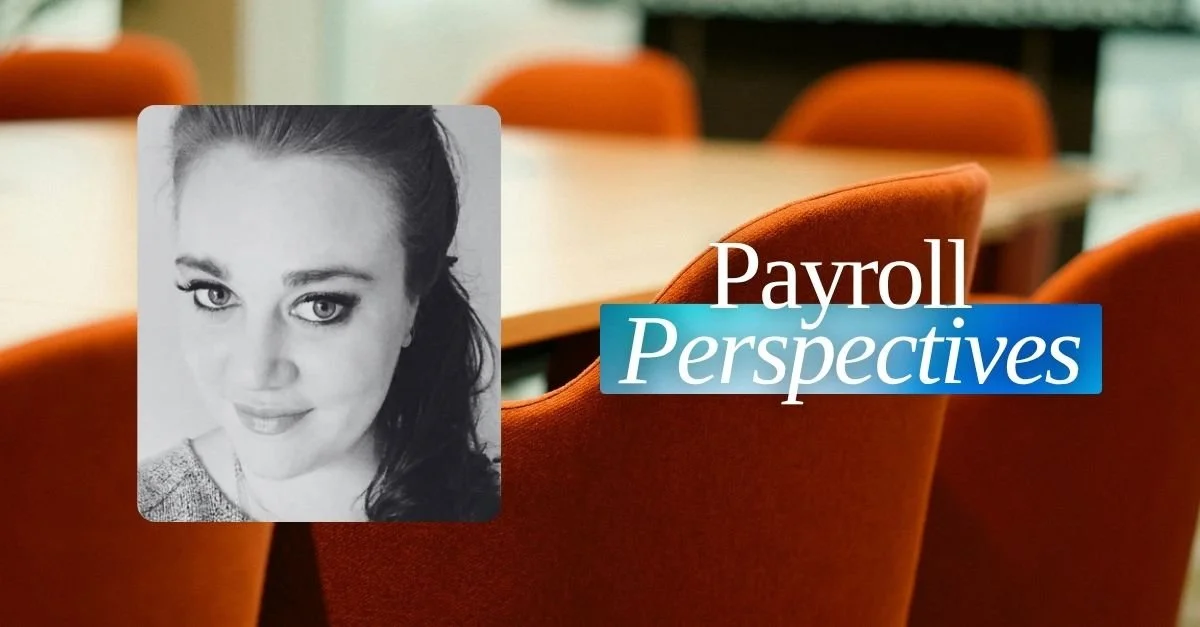
Payroll Perspectives — Paris Urquhart, Wilson Security
Summary
Paris Urquhart’s career has been shaped by an unconventional entry into payroll, “falling” into the field before building nearly two decades of experience and developing a genuine passion for a profession often overlooked.
A defining theme throughout her journey is reframing payroll as more than a transactional function — highlighting its complexity across compliance, systems and business decision-making, and the need for stronger understanding across organisations.
Her experience reflects the evolving nature of payroll, where professionals are increasingly required to challenge decisions, navigate regulatory requirements and act as advisors rather than purely operational processors.
She also highlights a key industry challenge — the need for new talent entering payroll — with a growing demand for training, development and greater visibility of payroll as a long-term career path.
A career you don’t plan
‘Falling’ into Payroll has been a lucky happenstance for Paris Urquhart — and it’s turned into almost two decades of luck, backed by hard work.
Now the Payroll Manager for Wilson Security, Paris has built an appreciation and genuine passion for the career-choice that used to fly under the radar. She sat down with Shawny Smith, for Payroll Perspectives.
Episode transcript
Shawny: Hi, Paris. Thanks for joining me for an episode of Payroll Perspectives.
Paris: Thanks for having me.
Shawny: No problem. Hope you’re doing well today. Not too nervous? I know this is not on the top of everyone’s list.
Paris: No, it’s definitely not something I would be doing as a quite introverted person.
Shawny: Well, I’m glad you’ve come out of your shell to join me. To start us off, why don’t you introduce yourself and give us a little bit of an overview on your career?
Paris: Yes. My name’s Paris. I’m currently the Payroll Manager for Wilson Security. I’ve been in payroll for approximately 16 years.
Shawny: Perfect. So since you were 19 — how did you actually get into payroll?
Paris: Sure. Like everybody says, I fell into it. I started at the Royal Children’s Hospital. I was going through a gap year and was planning to go back to uni the next year to do teaching. I got a job on the admin desk, then from there I got an internship in payroll — and here we are. Once you’re in, you can’t get out.
Shawny: It’s one of those industries where there’s always something to learn — it kind of keeps you in a chokehold.
Paris: Yes. I think what’s fun with payroll is it’s the best of both worlds. You’ve got enough HR in there that you’re talking to people and helping people, but then you’ve got enough finance in there that you’re working with numbers. It’s a really good balance — I’m not stuck doing one thing.
Shawny: It’s definitely a unique blended role — you need both the finance and HR mindset.
Paris: Yeah, definitely.
Shawny: You spent almost nine years in an outsourced environment. What was that like?
Paris: It was very different. At the Children’s Hospital, it was outsourced but based onsite, so it felt like you worked for the hospital. Then I moved into a proper outsourcing business with about 120 clients across a small payroll team.
It was fast-paced — you’d be working on one client, then have to immediately switch to another with completely different requirements. The experience was invaluable, and I wouldn’t change it, but it’s a very different way of working.
Shawny: You’ve seen both sides — a single large client and true outsourcing across multiple clients.
Paris: Yeah. And it was fully customisable. Clients could choose anything from simple data entry to full end-to-end payroll, including payroll tax. It was a wild ride — great experience, but not something I’d go back to now.
Shawny: I’ve heard that pace and variety can be a big learning curve.
Paris: Definitely. And people don’t realise how layered outsourcing can be. Sometimes you’re the fourth party in the chain — questions can take days to resolve. Compared to in-house, where you can just ask the CFO directly, it’s a big difference.
Shawny: You mentioned working across multiple systems — how important was that experience?
Paris: Massive. I worked across six payroll systems and multiple platforms. That exposure is a huge reason I’m where I am today. You wouldn’t get that depth of experience in a single organisation.
Shawny: It sounds like a great learning ground, especially early in your career.
Paris: Definitely. You also get exposure to implementations, parallel runs and system changes — things you might never experience in-house.
Shawny: Let’s pivot slightly — AI is a big topic. What impact do you think it will have on payroll?
Paris: From a day-to-day perspective, I don’t think AI will replace payroll. There’s too much human interaction — customer service, award interpretation, understanding personal circumstances.
Payroll isn’t black and white. There are always exceptions. AI might help as a tool, but there will always need to be a human behind it.
Shawny: That human element is hard to replicate.
Paris: Exactly. It’s a tool — not a replacement. People shouldn’t be worried about losing jobs to it.
Shawny: How do you feel about the media’s portrayal of payroll, especially with wage issues and backpay stories?
Paris: It’s scary, but also positive in a way — it’s bringing things to light. Payroll isn’t “set and forget.” It needs constant review and auditing.
It’s also pushed organisations to take payroll more seriously — investing in training and development, which is great to see.
Shawny: Sometimes the blame falls too heavily on payroll teams.
Paris: Exactly. Payroll doesn’t make all the decisions. We can guide and advise, but ultimately decisions sit with leadership. We’ll push back when needed, but we’re not always the final call.
Shawny: Let’s talk hiring. What do you look for when building your team?
Paris: Team fit is my number one priority. I have a long-standing team with very low turnover, so personality fit is crucial.
After that, I look at tenure — not as the only factor, but I do consider it. Training someone takes a lot of time and effort, so you want someone who will stay and grow.
Shawny: It’s a tough balance in payroll given how competitive the market is.
Paris: Definitely. But realistically, it takes 6–12 months just to fully understand a role. Ideally, people stay at least two years to really make an impact.
Shawny: Are you seeing enough junior talent coming through?
Paris: Not really — and that’s a concern. I’d love to see more junior candidates entering payroll. When I started, I just fell into it, and I’d love to be able to train and pass on knowledge — but the pipeline isn’t strong at the moment.
Shawny: Hopefully that shifts — it’s such an important function.
Paris: Definitely. We need fresh talent coming through.
Shawny: Payroll’s where it’s at — we’re selling it!
That’s all the questions for today. Thanks so much for your time, Paris.
Paris: Thanks for having me — it’s been fun.
Shawny: No need to be nervous!
Paris: It really is just a chat.
Shawny: Exactly — and we’ve known each other a while, so that helps.