
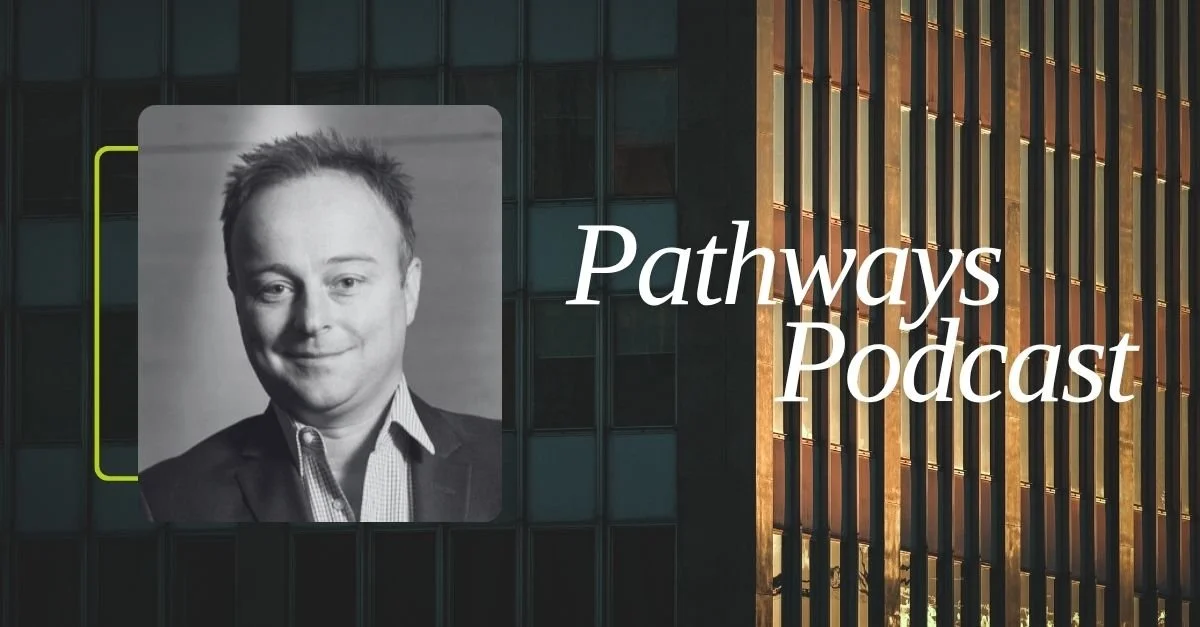
Pathways — Oliver Kysela, Endota
Summary
Oliver Kysela’s career has been shaped by transformation and adaptability, beginning in professional services at Ernst & Young before making a pivotal move into industry as a Financial Controller at Country Road.
His early commercial experience was defined by navigating business model challenges and turnaround environments, building a strong foundation in both technical finance and operational problem-solving.
A defining theme throughout his journey is leading change at pace — developing a structured approach to strategy and transformation, while ensuring teams stay engaged and aligned through periods of significant business evolution.
At Endota, he operates within a fast-growing wellness brand, driving large-scale transformation across systems, data and operations, while navigating macro challenges like labour shortages, digitisation and rising cost pressures.
Leading change at pace
From moving from professional services into his first commercial role as Financial Controller, Oliver has walked a path full of challenges which have shaped his CFO capabilities.
Craig Gorton, Director of Atlas Partners, sits down with Oliver Kysela, CFO of Endota, and walks through his professional career to date, challenges, mentors and key learnings.
Episode transcript
Craig: Oliver, can you walk us through your career journey and some of the key moments that have shaped it?
Oliver: Certainly.
I started my career at Ernst & Young in 1994, where I completed my CA. In 2001, I made the move into industry, joining Country Road as Financial Controller. That was a pivotal transition from professional services into a commercial role.
Country Road was a strong brand, but the business was facing significant challenges at the time. There was a turnaround strategy in place, and I was closely involved in implementing it. Shortly after I joined, the events of September 11 occurred, and within days we filed for Chapter 11 insolvency protection in the US. That accelerated the turnaround process over the following four years.
That period was incredibly formative and shaped how I think as a CFO today.
I became CFO of Country Road in 2006, then moved to Spotlight Retail Group in 2009. In 2012, I joined Witchery Group and led its sale to Country Road later that year, which brought me back as CFO of a much larger and more profitable group.
Following the integration and privatisation of Country Road, I moved to Forever New as CFO, then into M&A advisory at Edison Partners.
In 2021, I joined Grill’d as CFO, and more recently I moved to Endota. These roles marked a shift from consumer goods into consumer goods and services, which required a different way of thinking — particularly around data, labour-intensive operations and service delivery.
Craig: What foundational lessons have you carried with you from your early career?
Oliver: One of the most important is building a reputation for competence and reliability over time.
My first job was as a kitchen hand and cocktail barman, where I learned the importance of being dependable as part of a team. That mindset carried through into my time at EY.
I came from a public school background and felt a strong need to prove myself. I focused on doing every task — no matter how small — to a high standard and on time. That consistency created opportunities over time.
Mentorship has also been critical. The best mentors are able to translate personal experiences into practical advice, which makes it much more relatable.
Another key lesson is the importance of cash and liquidity. During my early time at Country Road, we faced near insolvency multiple times, which ingrained in me a strong focus on cash flow, forecasting and maintaining a robust capital base.
Craig: How did you end up in the retail sector?
Oliver: It was somewhat accidental.
Country Road had been acquired by Woolworths South Africa, and Ernst & Young — as their auditors — needed support with the Australian audit. I happened to be available at short notice and got involved in that work, which led to my ongoing involvement with the business.
Retail is a fascinating industry because it’s so relatable. Everyone interacts with it daily. It also has a complex value chain — from design and production through to customer engagement across multiple channels.
What’s particularly interesting is the intangible value of strong brands. That value isn’t always reflected on the balance sheet, but it’s incredibly powerful when a brand connects with its audience.
Craig: In your current role at Endota, what do you see as the key challenges and opportunities for CFOs?
Oliver: There are a few major themes.
The first is leading strategy and transformation. Over the past few years — through COVID and beyond — businesses have had to adapt quickly. CFOs play a key role in driving that change and ensuring it’s delivered effectively.
At Endota, for example, we’ve implemented a new ERP, rolled out a new POS system across our network, and transitioned major technology platforms — all within a relatively short timeframe.
The second theme is digitisation and automation. Labour markets are tight globally, and businesses need to find ways to improve efficiency through technology.
Third is data and analytics. The challenge isn’t just having the tools — it’s using them effectively. Building a continuous loop of data, insights and action is critical.
And finally, liquidity and capital management have come back into sharp focus. The cost of capital has increased, and there’s greater scrutiny from investors on returns and performance.
Craig: What would you say are your top lessons as a CFO?
Oliver: Three things stand out.
First, focus on maximising enterprise value. That starts with being a great brand, then a great business model, and finally a well-governed company with strong culture and stakeholder management.
Second, you can never over-prepare for board and investor interactions. The stakes are high, and you need to be ready for any question or challenge.
Third, one of the most impactful pieces of advice I received was to consider whether I wanted to be “right” or whether I wanted a relationship. Prioritising relationships — with peers, stakeholders and teams — is critical for long-term success.
Craig: Have there been mentors who’ve influenced your career?
Oliver: Yes, a couple stand out.
My predecessor CFO at Country Road, who had also been my audit manager at EY, played a significant role in my development. Without his support, I likely wouldn’t have had the opportunity to step into the CFO role.
I also benefited greatly from executive coaching. Early in my CFO career, I found the transition into an executive team challenging, and coaching helped me improve both my effectiveness and my relationships.
Craig: And finally, what advice would you give to future leaders?
Oliver: Leadership is fundamentally selfless.
If you achieve your own goals but don’t support your team, it’s not a success. Helping your team succeed should be a priority.
It’s also important to focus on how people feel. Creating an environment where people enjoy coming to work and leave feeling positive is key to building high-performing teams.
And finally, build strong, trusting relationships. If someone in your team wants to progress elsewhere in the future, they should feel comfortable coming to you for support. That’s part of developing people — and it’s incredibly rewarding to see them succeed.
Craig: And to finish — what’s your favourite book?
Oliver: Accelerating Excellence by James A. King.
It explores the connection between elite performance and both psychological and scientific principles. I find it really compelling, particularly how those ideas can be applied in both business and sport.
Craig: Fantastic. Thanks so much for sharing your insights, Oliver.
Oliver: Thanks, Craig.