NextGen Power Moves: Ancila Desai
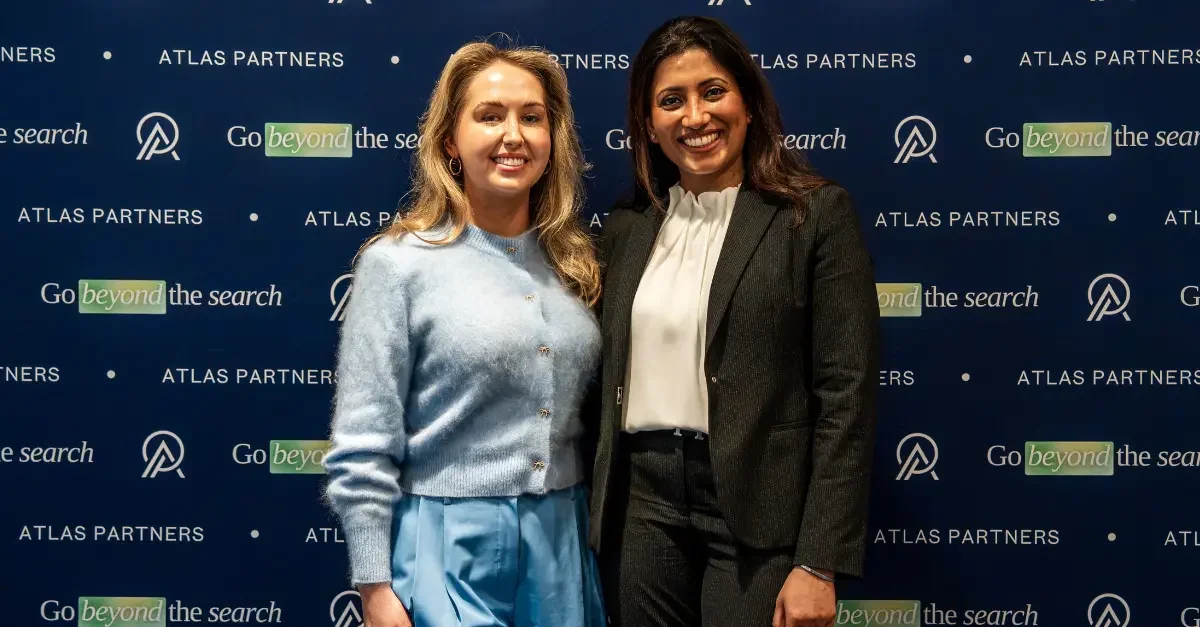
Ancila Desai, CFO & CIO of Procurement Australia and Brett Conley speaking at NextGen Power Moves
At a recent Atlas Partners NextGen Power Moves event, Brett Conley sat down with Ancila Desai, CFO & CIO of Procurement Australia, for a wide ranging conversation about career progression, leadership, confidence, family, continuous learning and the changing role of finance professionals. Drawing on her experience across multiple industries and functions, Ancila shared practical reflections on stepping into bigger roles, building strong teams, navigating career breaks and continuing to grow as a leader. The full conversation is captured below.
Brett: We’ve got lots of time this morning. Thank you, Ancila. We’ll get started.
Brett: As Lynn said, your career has spanned many industries and many roles. Was there a point, looking back, where you were attracted to something bigger and you went for it, or did the bigger roles find you?
Ancila: That’s really interesting. I think it’s been a combination of both. It’s constantly being curious and being open to opportunities. It’s not usually about the title, it’s about the role. I always feel like being a team player, being part of the team and contributing to the success of the team really gets you seen. So when those bigger roles came up, I was like, yeah, I don’t know everything about it, but I think I know enough that I can ask the right questions. Throughout my career, because I’ve done a lot of different roles, I think what stands out for me is that if it doesn’t challenge me a bit, and if I don’t feel really scared and uncertain, then I probably haven’t stretched myself enough. That’s probably helped me get those bigger roles and continue to evolve in my career.
Brett: When you think about those bigger roles coming up, I think about myself. I want to be seen and I want to be visible, but I’m currently maybe trying to stretch myself to find that visibility in the role. What advice would you give to someone like myself, or someone else?
Ancila: That’s a good question. As finance executives at the level we’re at right now, it’s really important to have your technical expertise. It’s always about how well can I do the job. But as you move into more executive roles, it’s about how well you can contribute to the team. So it’s a very different mindset. We’ll always be technical experts. That’s what we are. We’ve all done our CA, our CPA. Some of us are looking at our MBA. There’s other executive training at work. But executive presence doesn’t really come with a title. It comes with showing up and people recognising that you’re ready for it.
Use your technical expertise to your advantage. Don’t hide behind it, but start asking those relevant questions. There’s a very fine balance between asking too many questions and being annoying, and asking the right questions and being heard. So it’s finding those advocates in the business. But I always feel like it’s about contributing to the business rather than, “What’s in it for me?” When you’re starting off, it’s always about, “What’s in this for me?” It’s really important that I’m learning and I’m growing. When you’re ready to make that shift to say, “What is next for the business now? How do I bring that change to the business?” I think that really gets you a seat at the table.
Brett: When you made that realisation, was it helpful mentors, or were there other people in your corner helping you have that realisation?
Ancila: Definitely sponsors and mentors. Liam will know I’ve been very fortunate, and I hope I’m giving back as well. But it’s really important to have sponsors and mentors everywhere you go. It’s important to find people who you can speak to constantly because it’s very hard to see your blind spots. No one can — that’s why they call them blind spots. But it’s important to learn from those, and it’s also important to find people who can give you the right balance. Sometimes people are too critical and they’re not helping you learn, but some people are giving you just the right amount of leeway to learn and grow.
In my career, I’ve been really fortunate that I’ve had managers and people observing what I’ve done. They’ve been speaking for me when I’ve not been in the room, but they’ve also had the courage to come and tell me, “Hey, that wasn’t the right behaviour,” or, “That was too much. That was full-on. Tone it down. I know you’re keen, but maybe read the room a bit.” Those kinds of things help you balance how you want to be perceived, and hopefully it helps.
Brett: On technical skills, how have you found, where you’ve moved roles and within industries, that you’ve been able to tailor not just your technical skills coming from a financial controller position, but move within different industries and develop your knowledge of an industry really quickly?
Ancila: I think that’s quite interesting because that’s really hard to do. I’ve been fortunate that there were people who were willing to trust me early in my career. I’ve done transport and logistics, I’ve done FMCG, and I worked at IDT when we developed the first mRNA COVID vaccine. But entering those industries, you’re working with experts, especially operational experts who have lived their entire career there. When I was at Toll, the general manager had started with picking boxes. That kind of knowledge you can’t get as a finance expert who has just started in the role.
So for me, it’s always been about being really humble and acknowledging that I don’t have all the answers, but I do know the right questions. I was telling someone the other day, when I was working at Metcash — this was before COVID — I’d take my laptop and work in the store. I’d work with the operators in the store because I was really keen on learning retail. I wanted to know how stock was moving. We had a huge problem with obsolescence. We had a huge problem with shrinkage. By sitting in the store, I could see that. Then that got added to my portfolio because I seemed to be asking the right questions. I didn’t have all the experience, but you can add things to your portfolio by showing you’re willing to learn, and also acknowledging that you’ll never have the expertise of people who have worked 30 years in that career or in that industry.
Brett: You’ve also taken on broader areas. I’m sure it comes back to asking good questions, but what are some of the other things you’ve learnt in order to take on some of the areas you might not have had experience in, like legal or HR?
Ancila: I think it’s been so slow that it’s almost evolved over time and I haven’t even noticed it’s happened. In my last role, I was managing finance, and we had the head of global HR. She was really struggling with all the board reporting because, having an ASX-listed company in three geographies, we had the US operation, London, Australia, investors — it was a turnaround. So there was a lot of pressure on HR.
I would be writing all the People and Culture reports and doing all of that. She said, “Look, I’m happy to work with you, but maybe if you manage the global role, you can manage that executive narrative, and then I can manage the operation.” That’s how I took over HR, and it was really just a natural progression. Legal sort of comes hand in hand because you’re stepping on people’s toes anyway when you’re in finance, so it was easier to get that. But I also feel, after a period of time, finance, legal, HR and risk are all just different lenses to the same business. With the finance lens, we go deep into technology. With these other lenses, I just feel like I’m a more rounded executive because I understand more about the business.
Brett: That’s really interesting. Reflecting on myself, you’ve taken on a lot and gone through several industries. Even when I’m leading my team at work, I lead two female finance analysts and they’re brilliant. But I think one of the things that continues to hold a lot of females back in finance, and in corporate generally, is that lack of confidence where you think, “I’m not sure I’m ready for this. I’m not sure I have it in me.” You may compare yourself to more outwardly confident people in the office and think, “I’m just not quite at that level.” How do you overcome that moment where you’re thinking, “I’m just not sure I’m quite there yet?”
Ancila: I think the first thing, for me personally, is acknowledging it exists for everyone. When you’re trying to do something new, you always feel that you’re not ready for it. But you can’t wait for that perfect opportunity. Sometimes you have to step into it, and that’s been my personal journey. I’ve not known every role 100 percent — “Yes, I know exactly what to do” — but I feel confident enough that I can ask the right questions. I also feel confident that I am willing to learn.
That cannot be taken away from you, right? If you’re willing to learn, if you’re willing to put in the time, if you’re willing to do something formal on the side or something informal in your own time, then that’s how you start learning more. When we feel uncertain about a role, everyone feels it. But I don’t know, as women in general, we seem to wait a bit more than, say, our male counterparts. I do see this changing in the younger generation. They seem to be a lot more confident, which I’m really liking. It’s just about giving those people in the organisation who are not quite sure what they’re willing to take on that encouragement. Hopefully that will come back for us as well.
Brett: If you’re looking back at your career, maybe in the first five years, is there advice you would give yourself in that moment? Something you think, “I wish I’d done that,” or, “I wish I hadn’t done that”?
Ancila: I think I would stop apologising for just living my life — having my children, taking time off. As young executives, when you’re contemplating having a family, you’ve got other priorities outside work. It’s just that then we feel we have to prove, “I’m actually technically so superior that I can do it all.” But I wish I hadn’t done that, because I am technically superior, and having a child, taking time off work or getting married added different elements to my journey that made me unique.
But I felt, even though maybe I didn’t say it, I was constantly apologising for not being there. I felt like I had to do so much more. I constantly proved that I was technically strong. But I am technically strong. That’s why I have the job. That’s why we haven’t had any mistakes in reporting. If I could look back, I would just say all the experiences I had — the career breaks, the transition, coming back to work, struggling at work, especially when you have a child and come back — all of those things, I would stop apologising for having them and just own it.
Brett: That’s actually a perfect segue, because I was going to ask you. You were talking when we met the other day about having children a bit earlier in your career. Do you want to run us through some of your background and how you got to where you are now?
Ancila: Sure. I had children early in my career. I was just entering into a financial controller role, and the decision I made was that I was going to take a short break and come back. Everyone around me was like, “Yeah, yeah, we know.” But I was serious.
The challenge was I kept trying so hard to tell them I was going to come back, and they kept trying so hard to tell me I wouldn’t, that we didn’t officially put any leave in. They were convinced I wouldn’t come back. I’m like, “No, I’m coming back.” Then when I came back, there was already someone in my role. It was all unofficial, but — John’s a random enough name — John was the person. John was doing my job.
For many of you who’ve had kids, that emotional balance is really hard. I feel like I’m a really strong person, but after having both my boys, that emotional roller-coaster took ages to get okay. The hormone balance — I could work, but I was just so emotional. Then I get back to work, and John’s telling me what to do. I’m like, “That’s my role.”
Everyone was really sympathetic to John because now John was probably going to miss the promotion that he had been promised. I’m like, “Hang on, that was my role. Who gave you the right to offer him the promotion?” Then they had this conversation with me, which was kind of weird — or probably I wasn’t listening, I don’t know — but it was kind of like, “Why do you want this role at all? Just give it to John and do your thing. You’ve got children. Why do you need this?”
Maybe with the emotions, I was like, “No, that’s my role.” There’s no flex for John, but he can apply for a role in my team. This was Toll — it was a very male-dominated industry. In saying that, there were very few sponsors at that stage. My son’s only sixteen, so it wasn’t forty years ago. But I felt like we were so embarrassed about having kids and coming back, and having to go to the school if they were unwell, that we gave people power they didn’t need.
My family, in particular my mother-in-law and my husband, really helped me go back. Because I had a C-section, I was struggling a bit with driving. My husband would drive me and say, “Look, I will drive you. I will come and pick you up. Don’t worry about the baby, but let’s get this role back.” So I got the role back. But I always felt like everyone was most sympathetic to John because he lost his job. Too bad.
Brett: Is there any guidance, reflecting on that experience and maybe how traumatic it was, that you would give to people who are in a similar position, considering having kids or returning to work?
Ancila: Don’t apologise for your choices. People take three months to go to Europe. I took three months to have a baby, cut myself open and come back in, and I’m doing all of this. So I think I deserve this more than anyone.
What I would tell people is: be very confident about your choices. Career breaks, travel, whatever you choose to do — having kids is not for everyone — don’t apologise for that. A lot of times people will say, “Well, I don’t want to have kids. How do you feel about that?” I say, “It’s not my choice, it’s yours.” Be confident about your choices. Be very clear about what you want to do.
When you travel the world, that’s a rich experience you bring back to work. When you have kids, that’s a rich experience you bring back to work. We weave that into everything we do, and that’s what I do. My kids are studying, I’m studying too, and we’ve got to prioritise who studies when.
Brett: How do you think your leadership style has changed in the last few years, leading different teams and whatnot? Are there maybe three things that come to mind when you reflect on your leadership style and strategy?
Ancila: For me, leadership is all about courage, empathy and understanding. Because I manage very different teams, I think being present is really important, and that takes a toll sometimes more than anything else. When I had teams in Boston, London and Melbourne, with the time difference, I couldn’t have all my teams together even on a call. Sometimes it was wine and coffee, sometimes it was something else, just to get the time zones right. But I always tried to be present with my team when we were having those meetings. Sometimes it was on the Boston side, sometimes it was on the London side.
Being a leader is sometimes just about listening. Managing technology, for instance, I’m not a technologist. I haven’t formally studied in that space, but I do know how to ask the right questions. It’s also sometimes about giving that team a voice. So as a leader, it’s being present, giving them a voice, but also not having an agenda constantly with your team in every meeting. Listen.
Brett: I have this thought with my team — quite a diverse team. I always think about diversity within a team. Everyone has different experiences growing up, and I think that makes for a wonderful dynamic in the office. Is there anything in your upbringing that is your secret sauce that you bring to your roles?
Ancila: I think it’s more about that I like to be part of a team where I can bring a different perspective. But what I also try to do, especially managing HR, is bring in people who add to the dynamic and aren’t all the same.
There’s something called sunflower management, right? Where everyone on the team just agrees with you, and then everything’s good and everyone’s happy, but no one really is. My secret sauce is that I have a completely different journey. I bring a completely different perspective. Through that recruitment process and hiring process, I always encourage leaders: bring someone who can add to your skill, not bring the same. Bring someone with a different perspective, bring someone with a different journey.
If I’m looking at finance, I’d probably look at someone who’s got more of the financial reporting or tax background. If I’m looking at technology, I’d probably look at someone who’s more of a developer, because I can look at the strategy, I can see the horizons, I can see the build. But I need someone then to project-manage and build it. So it’s about being very confident about this diverse experience that I have, and then encouraging others to bring diversity into the team too.
Brett: Outside of your professional experience, what is something that people don’t know about Ancila? Is there anything that you think might surprise the room?
Ancila: A lot of people get surprised that I would be a musician had I not been an accountant — probably not a successful one. But I do play the guitar and the violin. I was in the symphony orchestra, so I really loved music.
For those of you who play music, you’ll probably see that music has a clear start and end. It’s got your repeats. I feel month-end is almost like a music theme — it goes on repeat, it’s got a rhythm, it’s got a plan. Music has always been my passion. I live vicariously through my boys now. They both do a lot of music — probably a little for mummy, a little for themselves.
I love learning, and I know sometimes that’s the geeky side of me, but I enjoy just picking up a course or reading a book and learning something. I also like to spend a lot of time with my friends because I think your network is where you can de-stress and get back to basics and just be yourself.
I’m very organised at work, to the degree that everything’s got to be in order, but outside work I’m the absolute opposite. Some people from work who see me outside work are really confused. I’d encourage you to just be very present with your friends. I’m 48, and all of my cohort — we’re all 48 — try to meet every year. These are my school friends, so I tell my boys, “I have kept these relationships for almost 40 years.” We meet every twelve to eighteen months and go somewhere. It’s important to keep those networks outside of work very active. That will actually help the mind and body.
Brett: I really love that point about your passion for learning. I think it’s something that maybe isn’t talked about as much. Even in the last five years, with Liam’s favourite word being AI — and we’ll come back to that — is there anything you’d suggest to the room? I know an MBA isn’t something everyone can pursue, but you’ve also recently done a short course with Harvard Online on AI. Is there anything you’d suggest that’s a bit more casual for people to progress their ongoing development?
Ancila: I think you’ve got to find what you’re interested in learning, because learning is important and that constant curiosity gets built over time. Sometimes for me it’s about work — I do need to understand technical work, so I do want to learn. But sometimes it could be another course, like a music course or an art course, or it could be painting. I’m horrible at painting, but I still like to go and paint.
I would say keep that curiosity going, so that you’re constantly learning. Learning is something that people can’t take from you, because you can change different jobs, but the learning you do stays with you. With online learning, and now with AI, there’s just so much. You can put a prompt in and get a course that’s tailor-made for your specific background. If you keep that going, then when you’re having these conversations at work, you don’t feel like you’re an outsider, because you’ve done a bit of learning and you can come into the conversation.
Brett: Speaking about technology, is there anything you’ve worked on, say in the last two years, within your role as CIO that you’ve learned? And what do you think we as finance professionals should be looking towards for the future in terms of our roles and technology skills?
Ancila: That’s a really good question, because we all think AI is changing work for us. But as finance professionals, what we bring to the table is that unique level of judgment, and there is no amount of AI that will ever change that.
It’s also important to understand that when we talk about generative AI, that is all yesterday — that’s not new. It’s not something that has come in today that’s suddenly going to change the jobs. It’s in everything we do. It’s in every vendor we work with. So it’s about being confident about bringing AI into work and then putting your judgment over it.
There are so many courses out there that you can do to learn what’s required for your role. I advocate for our company to start looking at courses, but not about, “How do you prompt ChatGPT?” Those things are not important. It’s about how AI is coming into our workforce, how it’s making it better for us, and how, as executives, we can actually ask the right questions to make it work for us.
As finance executives, it’s about making sure it’s almost like you’ve got another member in your team now, which you’ve got to train to work for you. If you look at it that way, then it’s not a threat, right? Sometimes you do have very intelligent people in your team who are probably going to do way better than you. But that’s life.
Brett: Is there anything we should be looking towards in the next five or ten years — even just for yourself — about where we should be trying to learn and develop longer term?
Ancila: I think finance professionals — and I’m biased, obviously — make the best senior executives and make the best switch across. I feel when you’ve got a CEO who doesn’t understand finance, it’s so obvious. It makes me cringe, because you’ve got to know these things.
Finance executives, because we have this grounding in financial talents and knowledge, can make the best executives wherever we go. With the world changing, and no one knowing what’s going to happen, I think for all of us it’s about reaching into those areas of interest that are adjacent to finance and simply starting to learn.
What’s going to happen is jobs will only get consolidated, not lost. Maybe there may not be just a finance role, but it could be finance and HR, finance and legal, finance and marketing. You can have a couple of agents working for you. So it’s important to start learning what’s out there beyond just finance, but making sure your finance skills are core. That’s what I like doing. But if you want to move out of finance, no one’s stopping you.
Brett: I know we’re coming close to time, so I might ask one more question and then we’ll throw it over to the room. We’ve touched on curiosity, not apologising and asking the right questions. Outside of those three things, what else would you like to leave as a message to the room in terms of women trying to climb the ranks and take the next step?
Ancila: The one thing I’d really like everyone to take away is: do not apologise for who you are and for your background, because what we bring is so unique. We bring empathy, we bring being real, being authentic, and people need to recognise us for who we are, not the other way around.
We’re experts, we know that. Of course we are experts, but it’s about adding more value to the team without apologising for our background and career breaks. I always feel even in interviews people are so apologetic: “Oh, I took a year off and I had kids.” But, “I took a year off, I had kids, and we went travelling,” or, “We did whatever.” That just shows that someone’s confident about what they’ve done rather than apologising for it. It’s just a mindset.
Brett: Great, that’s a great line. Thank you.
Audience Q&A
Power Moves attendee: Good morning, everyone. It was really nice to hear from Brett and Ancila. You mentioned that you had mentors and sponsors. How did you go about getting them across the board? Did they offer to be a mentor? Did you actively reach out to those people? How did you reach out to them? Were they within your organisation? Were they outside? Were they peers you worked with previously? I’d love to know more about that.
Ancila: That’s a really good question. Today I see there are a lot of formal forums to have mentors — Atlas Partners does a mentoring program. But in my time, it was people I worked with. Sometimes when you’re in a meeting, Fred will come to me afterwards and tell me, “Hey, you did this well, but you could have done that.” That becomes an informal mentorship experience.
I’ve been fortunate that my managers have really been advocates of what I’ve done. Over a period of time, as I move roles, I’ve always leaned back. My manager at Metcash — and that was a while ago now, about ten to twelve years ago — I still go back to him and say, “This is what I’m thinking. This is what I’m looking at doing. What do you think?”
Sometimes it’s just building relationships. Life can become very transactional at work, and I’d always say spend more time learning about people, because people really support you on that journey beyond just the job you’re in. I’ve gone back to people I’ve worked with previously and said, “Do you mind? I had a few questions,” or they’ve come to me, and that’s how we build that relationship.
Sponsorship is more interesting because it’s not something you can actively pursue. It happens behind your back a lot of times. It’s in those board meetings when people are talking about other people and you realise, “Okay, you’re really good at what you do, and I’m advocating for you.” Sponsorship comes with being seen and heard in the organisation. But if someone comes to you with feedback, they’re probably starting that mentorship journey, so just be aware of that.
Power Moves attendee: [continuing] I’ve got two kids. I’m constantly feeling guilty that I’m not spending enough time with them. I come home at six-thirty or seven p.m. and I don’t get to ask them much about their day or their studies. So as an executive, how do you feel about it? Is this something we just have to accept, that as working mums we’ll have this feeling for the rest of our lives, and move on? Or do you think there’s something else we can do to balance that work-life balance?
Ancila: When you talk about work-life balance, you’ve got to take the horizon into account. It’s not one perfect day where you have fifty percent of your time at work and fifty percent outside. It’s over a period of time where you’ve given every aspect of your life the right importance.
As a mum, when you’re working in intense environments, you’ve got year-end, you’ve got travel commitments, family takes a back seat. But then sometimes it could be as simple as my son running a race and I’m taking time off work to watch that race — and that is the most important thing.
It’s mum guilt. We always feel guilty. But my husband says he feels that guilt too, so maybe men just don’t talk about it as much as women do, because we take the front seat for nurturing and managing our children. It’s about making sure that over a horizon you’re giving the right things in your life importance. If it’s not work, it’s not. But if it is work, then what are you doing to get your career to the right place as well?
I feel it’s really important to give your children time, but it’s also really important for your children to see that mummy’s working really hard. So that’s a good balance — “Mummy’s on a call, don’t come into the study” — and that sets a good boundary for them to learn as well.
Power Moves attendee: One question I often get asked: for senior promotions, all of a sudden you have to business partner with the head of marketing or the head of operations — very senior people in the organisation who might be reporting to the CEO or are their peers. How do you manage developing relationships at that level and creating that good business-partnering skill set?
Ancila: Good question. In finance, business partnering is really important. We started even renaming those finance manager roles to business partner roles, because that’s what it is.
For me personally, doing an MBA a couple of years ago was really handy because we focused on marketing, we focused on operations, and we went more in depth into those areas that my peers are working on. So it really helped with opening the conversation.
But when I go into areas that I’m not quite comfortable with — we had 200 million patient records in the US that we were managing, and being the head of finance and managing privacy in Australia, that came under my portfolio. I had no idea what that meant or what to ask. There’s so much legislation in the US.
What I would do is lean into those executives and just ask, “What’s important for you? What’s happening? What do I read? Where do I get more information?” Sometimes when you ask and you want to learn, people are willing to share how to get to that point, and that helps me. People try to come in and change everything very quickly. I try to learn before I change. That’s helped me a lot.
Power Moves attendee: In my current workplace, we have been through a change of formation. It’s been nearly nine months, and we’ve been on a road where we’re not sure where we’re going to get the job, whether the company is going to keep us, etc. In the last three months I had the opportunity to stretch myself with certain tasks in the business. Today at eleven o’clock there’s a meeting where a decision will be made about whether I’m going to be in the business or what role they’re going to offer. I’m nervous. I don’t know what to expect. HR already told me there’s a meeting today at eleven o’clock. They’re sending me a letter, “Don’t panic,” and the letter was pretty generic as well — she said it was going to be generic. What advice can you give so that I can go in feeling more settled?
Ancila: With your experience, especially with transport and logistics — because we had a chat before — I think you’ve got so much to add. The fact that in the last couple of months you’ve actually tried to learn and grow, that’s a personal win for you.
They’ve already made a decision in a lot of ways on where they’re going with it, because these decisions take board approval, so it goes through stages before it comes to you. I think what you need to take away from this experience is that if there was a nine-month transition, rather than sitting back and waiting for the outcome, you actually learned.
If you have to talk about this experience with a future employer, it’s about, “I was hit with something. Rather than just sitting back and waiting, I tried to learn what the new organisation was about.” So what you’re bringing is curiosity, a willingness to learn and wanting to take on more.
Don’t apologise for the fact that business changes happen, because we live in a country where consolidation is constant. Through acquisitions, we sometimes hire great people, but through acquisitions we also have to let people go. It’s not about the person, it’s about the role and the requirements. But the fact that you’ve already learned more, I think you’re a winner anyway. All the best.
Power Moves attendee: Thank you for the session, it’s quite amazing. How do we do it all?
Ancila: There are literally just 24 hours in a day, and I like to be really productive with my time. The one thing that’s non-negotiable is my exercise. Everyone knows — work and home and everything else — I’m like, “This is mummy’s me-time. This is mummy’s thing.” So I don’t want anyone near me, especially my two boys.
But it’s just about thinking about what you want to do and what makes you happy, right? If watching TV makes me happy, then do that. After a certain point, you’ve just got to stop apologising for what you want to do.
This weekend, my children were upset because they both didn’t make semi-finals for basketball. I felt a bit sad in front of them, but internally I was like, “Wow, I’ve got the whole weekend.” What I chose to do was sleep, because I couldn’t sleep normally. I had a coffee and lay in bed. I came in on Monday and said, “Guess what? I lived on Saturday. I was in bed all day.”
Sometimes you enjoy doing nothing. On the other hand, last month I was doing this AI course with Harvard Online, and I was staying up until about 2 a.m. because I had to finish all the modules in a certain time. Again, that was my choice. So it’s about doing whatever makes you happy and not apologising for it. It comes with practice, because sometimes you feel really nervous, like, “Oh, they’re going to judge me now.”
Power Moves attendee:: What do you mean? You’re talking about work, right? Sometimes you have to get to work as well, right?
Ancila: What we tend to forget — and I have to tell this to a lot of juniors; it’s not relevant to this room — is that lifestyle is paid for by work. This is a challenge with the new generation. They always think work has to fit into their lifestyle, and I don’t think they can be more wrong.
Work pays for the lifestyle, and that’s really important for me. This is a job, and as much as it’s giving me fulfilment and a career, it’s also paying for that lifestyle. It’s paying for my children to have the lifestyle they have. So I don’t look at it as, “It’s not my choice.” It’s required for the job. If it means working 24/7 to get that annual report out and make that decision, I’ll do it.
Power Moves attendee: I just had a quick question. I think in finance you’re lucky in the sense that you can really go deep or you can go broad, and it seems like you’ve really gone broad. Was that a conscious decision? Did you have a plan?
Ancila: No, I didn’t. It just evolved. I think when you start in finance, you start at a certain level, then opportunities come your way. A lot of it is destiny, a lot of it is just what your interests are, but it’s being open to those opportunities.
I remember the first time, when I joined Toll, I’d been there three months and I got the opportunity to manage the team. Everyone else in that team had been there for a couple of years, and I was under 30, so I knew how hard it would be to manage. So I said no. But then they encouraged me: “Well, you want to be a leader. This is the time to give it a go.”
Sometimes you get the opportunity and it’s not going to come again, and you’ve got to decide whether you’ve got the right skill, the right interest, and whether you can work hard to get there. I think roles are all going to get very broad in the future, just because of the way the world is going. But I was lucky that I got those opportunities. Some of them I actively pursued, and some of them came to me.
Liam Killen: Thanks, Ancila and Brett, and thank you all. To recap, we’ve got two more sessions to come. This is all brought to you by Atlas Partners. We are a recruitment agency that focuses on your world, accounting and finance. We are career journey partners, so we’re here every step of the way — before, during and after the job search.
While these moments of learning and connection are available, we’re going to keep presenting them to you. If you are looking for a role, of course we’re here to support that, and if you do start needing to hire, we’re here for that too. Looking forward to connecting in due course. Enjoy your morning. Thanks.