Owning your career — Lessons from the opening session of NextGen Power Moves series 5
NextGen Power Moves back for series 5
Series 5 of NextGen Power Moves began with a full room of Melbourne’s emerging finance leaders at the RACV Club and a conversation that went well beyond traditional career advice.
Our guest, Allison Robison, has built a career across banking, telecommunications, professional services and sport, including four and a half years leading People & Culture at Cricket Australia.
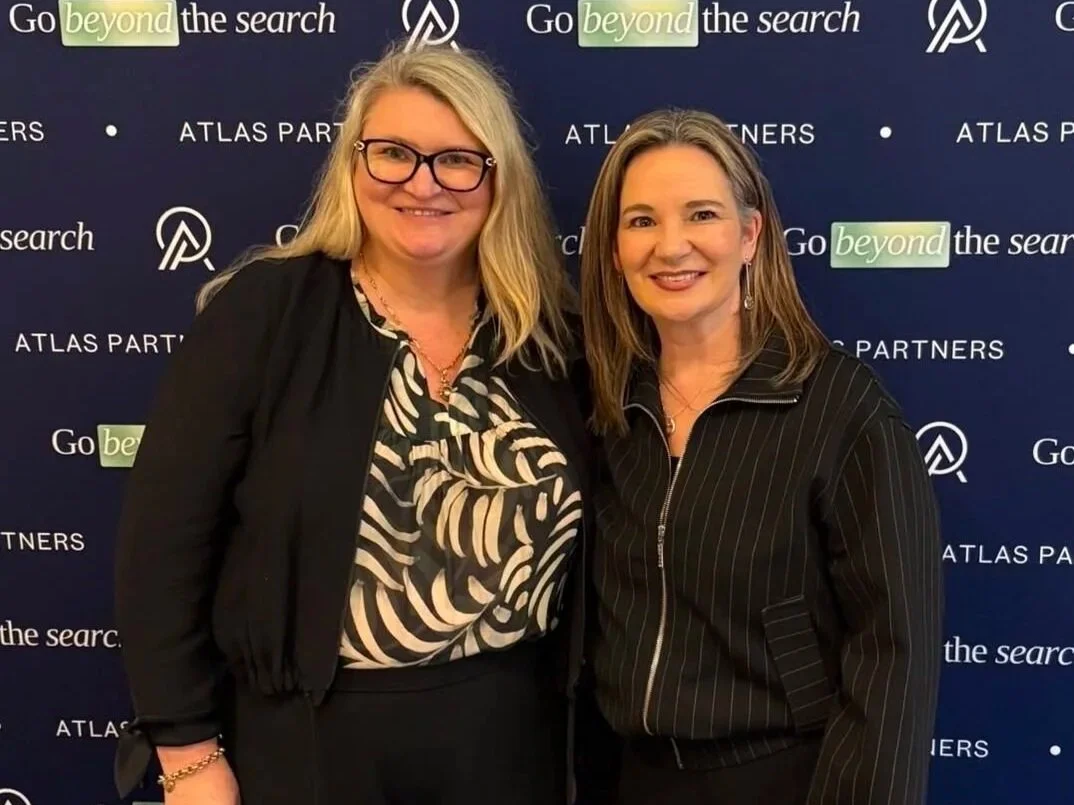
She was joined by Samantha Douglas, EGM Finance at Coles and former CFO of Cricket Australia.
Having worked alongside each other twice during their careers, Samantha and Allison brought an openness to the conversation that allowed them to explore some of the less polished realities of building a successful career: uncertainty, changing ambition, imposter syndrome and knowing when a role no longer fits.
Here are some of the ideas that stayed with us.
Your career is yours to own
One of the strongest messages from the morning was also one of the simplest: no one will ever understand your career as well as you do. That means career decisions need to begin with a clear understanding of yourself.
Finance leaders are accustomed to making decisions based on evidence, yet career decisions can easily become driven by emotion, external expectations or the opportunity sitting directly in front of us.
Allison encouraged the room to approach career decisions with the same level of objectivity.
What are you genuinely good at?
What kind of work gives you energy?
What problems do you enjoy solving?
What environments allow you to perform at your best?
And perhaps just as importantly, what no longer motivates you?
The more clearly you can answer those questions, the easier it becomes to assess whether an opportunity is actually right for you — rather than simply looking good on paper.
Sometimes the role changes. Sometimes you do.
Careers are rarely linear. A role that once felt exciting can eventually feel uncomfortable or limiting. And when that happens, it is easy to turn the experience inward and assume something has gone wrong.
The conversation offered a different way to think about it. Both people and organisations are constantly evolving. Your ambitions change, your strengths develop, your priorities shift.
At the same time, organisations change strategy, leadership, structure, culture and expectations. Sometimes two things that once aligned simply begin moving in different directions.
That does not necessarily mean the employee has failed, or that the organisation has done something wrong — it may simply mean the fit has changed. Being able to recognise that objectively can make career decisions much easier.
Instead of asking, What is wrong with me?, the more useful questions may be: Has the role changed Have I changed? And is this still the environment where I can do my best work?
Imposter syndrome doesn’t disappear when you become senior
One of the most relatable discussions of the morning centred on imposter syndrome.
It is often framed as something experienced early in a career — something people eventually leave behind once they gain enough experience, seniority or confidence. In reality, that is rarely how it works.
Many highly accomplished executives still experience moments of doubt. The difference is often not that the feeling disappears, but that they become better at recognising it and preventing it from influencing their decisions.
A few practical strategies emerged from the discussion.
Name it
Go back to the evidence
Separate confidence from fit
Talk to people who have been there
Composure isn’t the absence of emotion
Another valuable observation from the morning was around leadership presence; composure is sometimes mistaken for appearing unaffected at all times. But leadership does not require removing emotion from the equation — instead, composure is about being able to choose how and when you respond.
Strong leaders can experience uncertainty, frustration or pressure without allowing those emotions to dictate every interaction. It is not about becoming emotionless, it is about becoming deliberate.
And one piece of advice for every finance leader
Perhaps the most practical line of the morning came directly from the Chief People Officer: Make best friends with your People Partner.
As finance leaders become more senior, their success increasingly depends on much more than technical finance capability. They are leading teams, influencing culture, managing organisational change, navigating performance conversations and helping shape the future capability of the business.
Building a strong relationship with your People team gives leaders another perspective on those challenges — and often makes them better leaders as a result.
Creating conversations emerging leaders don’t always get access to
NextGen Power Moves was created to give emerging finance leaders access to the conversations, perspectives and relationships that can help shape the next stage of their careers.
Not just conversations about how to secure the next promotion, but about how to build careers that remain aligned with who they are becoming.
A huge thank you to Allison Robison and Samantha Douglas for opening Series 5 with such a generous and candid discussion, and to everyone who joined us at the RACV Club.
We’re looking forward to continuing the conversation throughout the rest of the series — find out more about our initiatives.